Guide
Seeing your coverage: fluorescent dye and a UV torch
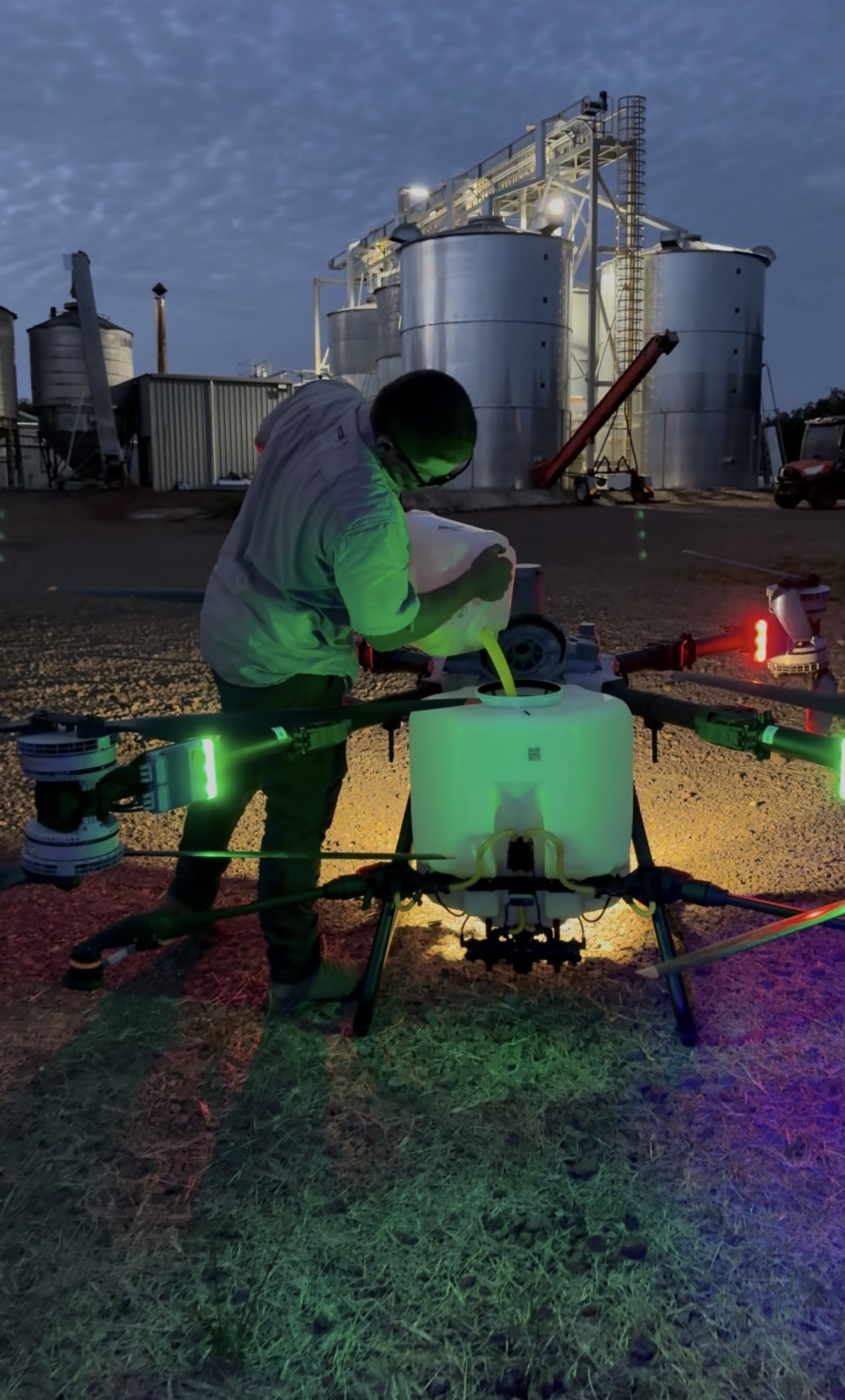
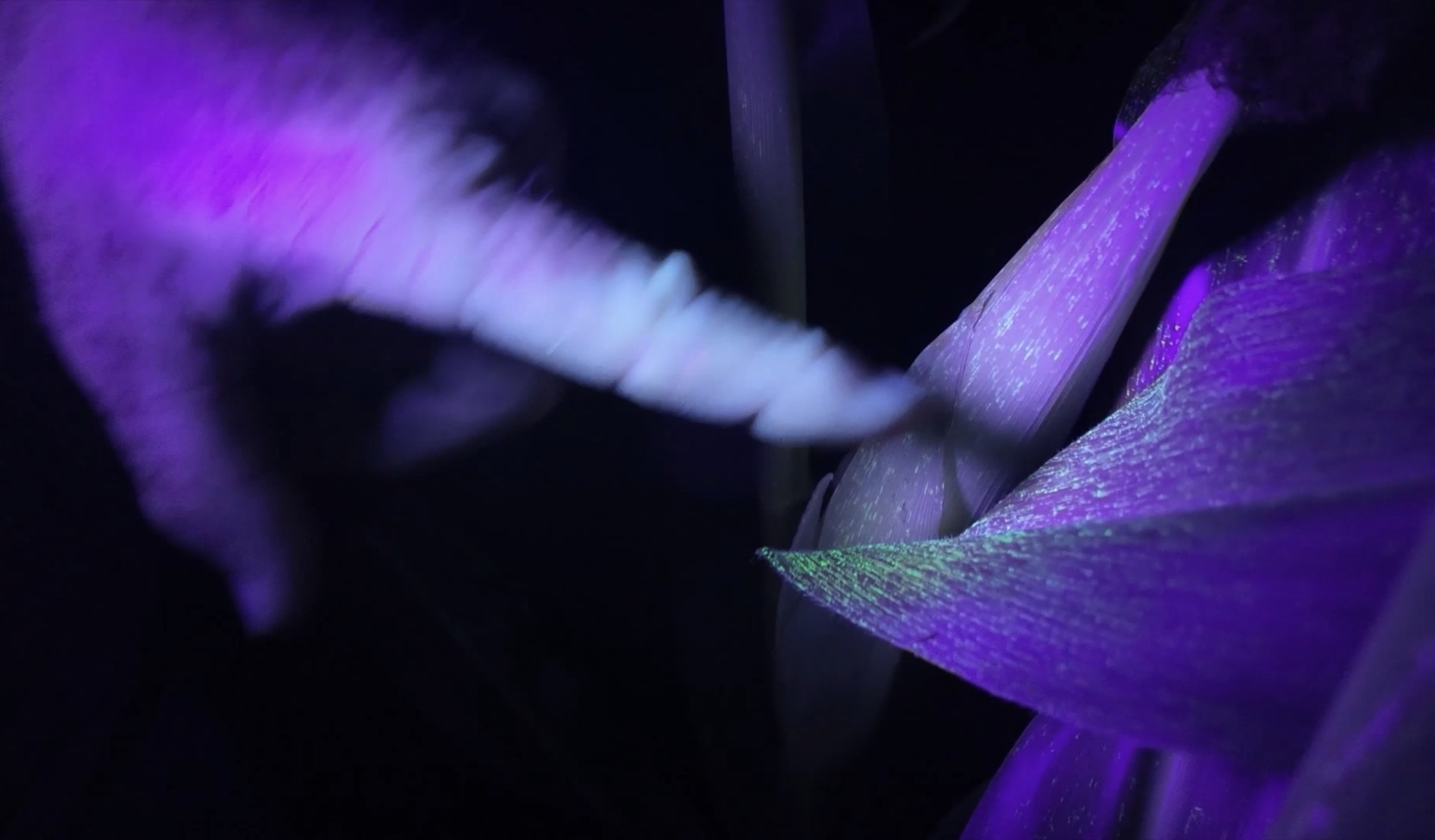
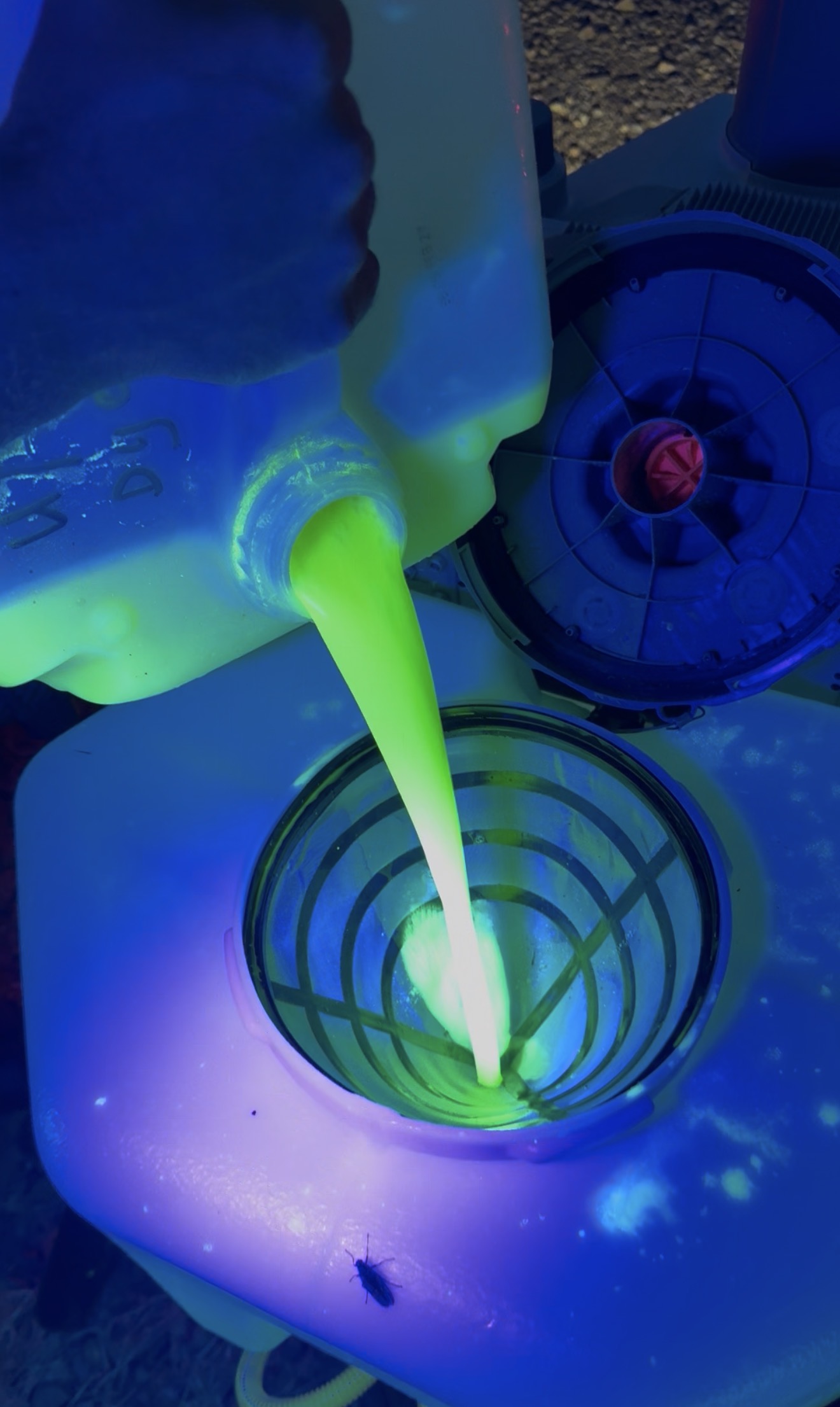
You can't manage what you can't see. Water-sensitive paper tells us the droplet count and the swath; fluorescent dye tells us exactly where the chemical actually landed. Add a fluorescent dye to the tank, spray the test as normal, then walk the crop at night with a UV torch — and the coverage lights up.
Why we do it
There's a gap between what a job looks like and where the chemical is. Under a UV light, that guesswork disappears. You can see the coverage on the leaves, whether it's reaching the part of the plant you're actually targeting — for fall armyworm, that's the silks and the cob, not just the top of the canopy — and exactly where the gaps are. If it's not on target, you see it, and you fix the setup before it costs the grower a result.
It's cheap for what it tells you
For around $250 of gear — fluorescent dye (about $15 a test) and a UV torch ($100–150) — you get real, visual proof of your coverage in the field. It stops the confusion, and it means we can actually show a grower where the chemical went, not just tell them.
Proof, not marketing
This is the difference between a professional applicator and someone who just flies the drone. We pattern-test, we dye-test, and we keep the records — so the result isn't a guess. If your operator can't show you their coverage, ask them why.
Want an operator who proves the coverage? Talk to All Flight — 0437 761 273.